
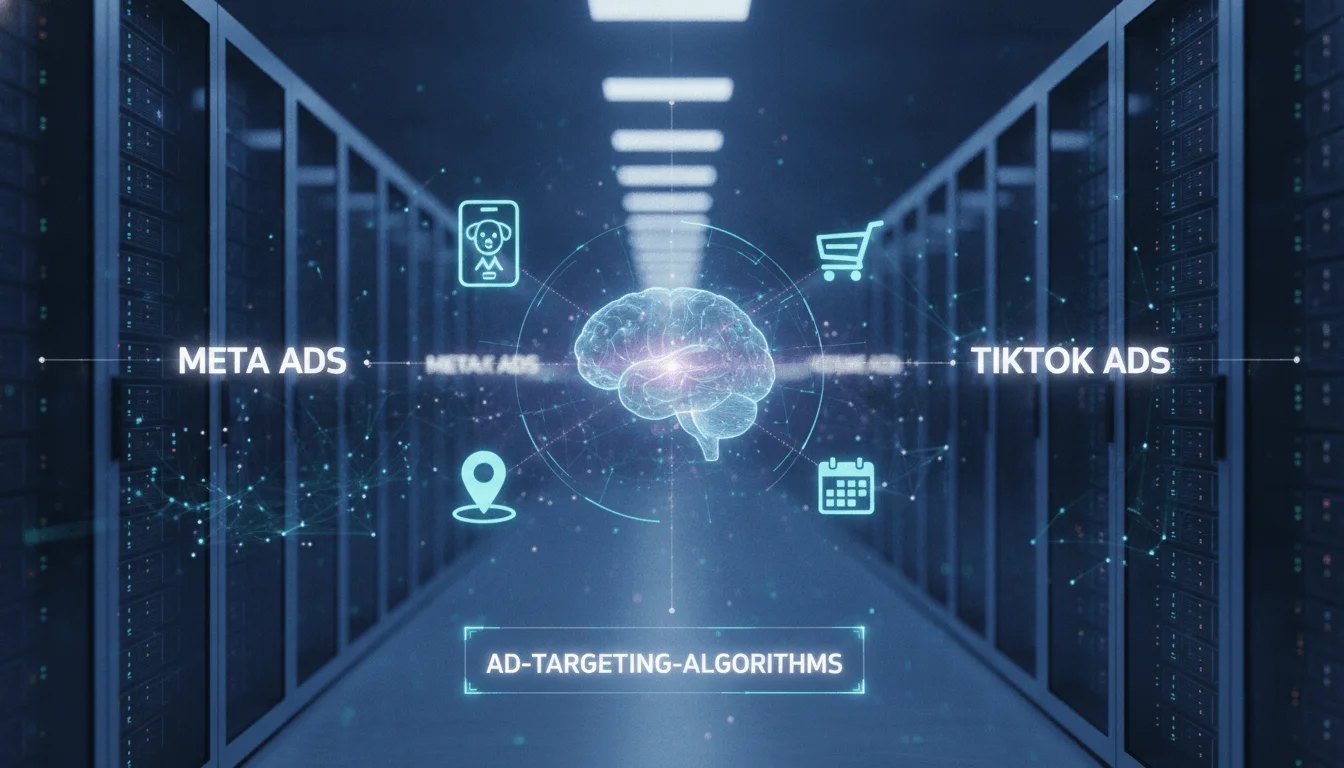
Unmasking the Magic: How Ad Targeting Algorithms Really Work (and Why It Matters to You)
You’re
scrolling through your social feed, maybe looking at pictures of
adorable puppies, when suddenly, an ad pops up for a brand of dog food
you were just thinking about buying. Coincidence? Not a chance. Welcome
to the captivating, sometimes eerie, world of ad targeting algorithms. These
aren't just fancy tech terms; they're the invisible architects of our
online experience, constantly working behind the scenes on platforms
like Meta, Google, TikTok, and countless other ad networks. They're
designed to connect you with products and services you're genuinely
interested in, making advertising feel less like an intrusion and more
like a helpful suggestion. But how do they actually pull off this
digital mind-reading act? Let's peel back the layers. At
the heart of every effective ad targeting algorithm lies an enormous
ocean of data. Think of it like a giant digital jigsaw puzzle, with each
piece representing a little bit of information about you and your
online habits. This data comes from a myriad of sources: Your Activity on the Platform:
What posts you like, comments you leave, videos you watch, pages you
follow, and even how long you linger on certain content – it all gets
noted. If you spend hours watching DIY home renovation videos on TikTok,
guess what kind of ads you're likely to see? Your Browsing History:
Websites you visit, products you search for on Google, articles you
read – these breadcrumbs leave a trail that helps algorithms understand
your interests and intentions. Demographic Information:
Your age, gender, location, and even reported interests (if you've
provided them to a platform) contribute to a broader profile. Offline Data (Sometimes): In some cases, companies might even integrate offline purchase data or other information to create a more holistic view. It's
a lot of information, and it paints a surprisingly detailed picture of
who you are, what you care about, and what you might be inclined to buy. Once
the data is collected, the algorithms—powered by sophisticated machine
learning (ML)—get to work. Think of ML as the "brain" that processes all
this raw information. It doesn't just passively store data; it actively
learns from it. Here’s a simplified look at what these ML models are doing: Pattern Recognition:
The algorithms look for patterns in your behavior and compare them to
the behavior of millions of other users. If people who frequently search
for "hiking boots" also tend to buy "camping tents," the algorithm
makes a connection. Predictive Modeling:
Based on these patterns, the algorithms attempt to predict your future
behavior. "Given what this user has done in the past, what are they most
likely to be interested in next?" Segmentation:
Users are grouped into various "audiences" or "segments" based on
shared characteristics, interests, or behaviors. Advertisers then choose
which of these segments they want their ads to reach. This
learning process is continuous. Every click, every scroll, every
purchase refines the algorithm's understanding of you, making its
predictions more accurate over time. While
the core principles remain similar, each major ad platform has its own
unique flavour and strengths in how it applies these algorithms. Meta Ads (Facebook & Instagram):
Meta excels at leveraging social connections and deep interest graphs.
They know not just what you like, but what your friends like, what
groups you're in, and how you interact with brands on their platforms.
Their ability to create "lookalike audiences" – finding new users who
resemble your best customers – is particularly powerful. Google Ads (Search & Display Network):
Google's strength lies in intent. When you type a query into Google,
you're explicitly stating what you're looking for. Their search ads
target you at the precise moment of intent, while their vast display
network uses your browsing history and interests to show relevant ads
across millions of websites and apps. TikTok Ads:
TikTok’s algorithm is notoriously good at understanding short-form
video consumption. It quickly learns what content keeps you engaged,
whether it's dance challenges, cooking tutorials, or niche comedy. This
allows advertisers to target users based on very specific content
interests and even video interaction styles. It's
important to remember that algorithms are tools. Advertisers still play
a crucial role in defining their target audience (who they think
they want to reach) and crafting compelling ad creatives. The algorithm
then acts as the matchmaker, connecting the right ad with the right
person at the right time. For
example, a small business selling handmade jewelry might tell Meta Ads:
"I want to reach women aged 25-45, living in major cities, who have
shown interest in 'crafts,' 'fashion,' or 'jewelry design,' and have
recently visited my website." The algorithm then sifts through its data
to find users matching those criteria. On
one hand, ad targeting can be incredibly helpful. It means less
irrelevant clutter and more exposure to things you might genuinely
appreciate. Discovering a new product or service that solves a problem
you have, all thanks to a well-placed ad, can feel genuinely useful. However,
it also raises important questions about data privacy and the extent to
which our online lives are being monitored. While platforms strive to
anonymize data and provide privacy controls, the sheer volume of
information collected is staggering. Understanding how these algorithms
work empowers you to make more informed decisions about your online
privacy settings and how you interact with digital content. Ad
targeting algorithms are constantly evolving, becoming more
sophisticated, and integrating new technologies like AI and even more
advanced predictive analytics. They are an undeniable force in the
digital landscape, shaping how businesses connect with customers and how
we discover new things online. So,
the next time an ad seems to read your mind, take a moment to
appreciate the intricate dance of data and machine learning behind the
screen. It’s not magic; it’s just incredibly smart technology, working
tirelessly to make the digital world a little more personal for you. Navigating
the world of personalized advertising can sometimes feel like stepping
into a labyrinth. We've gathered some of the most common questions
people have about how ad targeting algorithms work, and why they matter
to you. A1:
Think of it as a super-smart digital detective. An ad targeting
algorithm is a complex piece of software, powered by artificial
intelligence and machine learning, that analyzes vast amounts of data
about your online behavior, interests, and demographics. Its main job is
to predict what products or services you might be interested in, and
then ensure that relevant ads are shown to you on various websites and
apps. It's how advertisers try to show you things you actually care
about, rather than random, irrelevant ads. A2: They gather information from many sources, primarily your online activities. This includes: Your actions on social media: Likes, comments, shares, pages you follow, videos you watch, and time spent on content. Your browsing history: Websites you visit, products you search for on Google or Amazon, articles you read. Demographic data: Information like your age, gender, and location, which you might have provided to platforms. Inferred interests: If you frequently look at travel blogs, the algorithm infers you're interested in travel. Offline data (sometimes): In certain cases, data from real-world purchases or interactions might be linked. It's essentially a digital footprint you leave as you move across the internet. A3:
Their primary goal from an advertiser's perspective is to connect you
with products or services that you are genuinely likely to purchase.
While this is ultimately about driving sales, the intent is often to
make advertising more efficient and less intrusive for the user. If an
ad is relevant, you might perceive it as helpful rather than
manipulative. However, understanding how they work allows you to be more
aware of their influence on your purchasing decisions. A4: While the core principles are similar, each platform has unique strengths: Meta Ads:
Excellent at leveraging your social graph (who your friends are, groups
you join) and deep interest profiles based on your long-term
interactions within their apps. They also excel at "lookalike
audiences," finding new people similar to existing customers. Google Ads:
Particularly strong in "intent." If you search for "best running
shoes," Google knows you're actively looking for running shoes right now. Their display network also uses your broader browsing history to show ads across millions of websites. TikTok Ads:
Highly effective at understanding short-form video consumption and
identifying very niche interests based on the content you watch,
interact with, and create on their platform. A5: Yes, to a certain extent! All major platforms offer privacy settings where you can: Review and edit your "ad interests": See what interests the platform has inferred about you and remove any you don't like. Opt out of personalized ads: This won't stop you from seeing ads, but it will reduce their relevance, meaning you'll see more generic ads. Manage location sharing: Limit access to your location data. Clear your browsing data: Regularly clearing cookies and browsing history can make it harder for algorithms to track you across different sites. Use ad blockers: While not directly stopping targeting, ad blockers can prevent many ads from even appearing. It's a good idea to regularly check your privacy settings on platforms you use frequently. A6: This is a common concern! While your phone's microphone could
technically listen, major platforms consistently deny using your
microphone for ad targeting. The more likely explanation is that you've already
engaged with that topic online in some way (a search, a social media
post, an email), or perhaps a friend did, and the algorithm connected
the dots. The amount of data collected from your digital actions is so
vast that platforms don't typically need to resort to listening to your
conversations for ad targeting purposes. A7:
Generally, no. Ad targeting works by grouping users into anonymous
segments and profiles. While they build a very detailed profile of behaviors and interests
linked to a specific device or account, this profile is typically
decoupled from your personally identifiable information (like your real
name and exact address) when it comes to the ad matching process.
Advertisers usually target "people interested in hiking," not "John
Smith who lives at 123 Main Street." A8:
Adding "2026" to the title signals that the discussion is current and
forward-looking, reflecting the latest trends, advancements, and perhaps
even anticipated changes in digital advertising within that timeframe.
While the fundamental principles of data collection and machine learning
remain, the sophistication, precision, and integration of AI in these
algorithms are constantly evolving, making them even more powerful in
the near future. It’s about keeping pace with how quickly this
technology is advancingThe Foundation: Data, Data, and More Data
The Brains of the Operation: Machine Learning
Beyond the Basics: How Specific Platforms Get Creative
The Advertiser's Role: Crafting the Message
The "Why It Matters to You" Part: Privacy and Personalization
The Future is Now
Frequently Asked Questions About Ad Targeting Algorithms
Q1: What exactly is an "ad targeting algorithm"?
Q2: Where do these algorithms get their information about me?
Q3: Are these algorithms just trying to manipulate me into buying things?
Q4: How do platforms like Meta (Facebook/Instagram), Google, and TikTok differ in their targeting?
Q5: Can I control or limit how I'm targeted by ads?
Q6: If I talk about something near my phone, will I get ads for it?
Q7: Do these algorithms know my exact identity?
Q8: What does "2026" mean in the context of ad targeting algorithms?

No comments yet.
Be the first to share your thoughts!